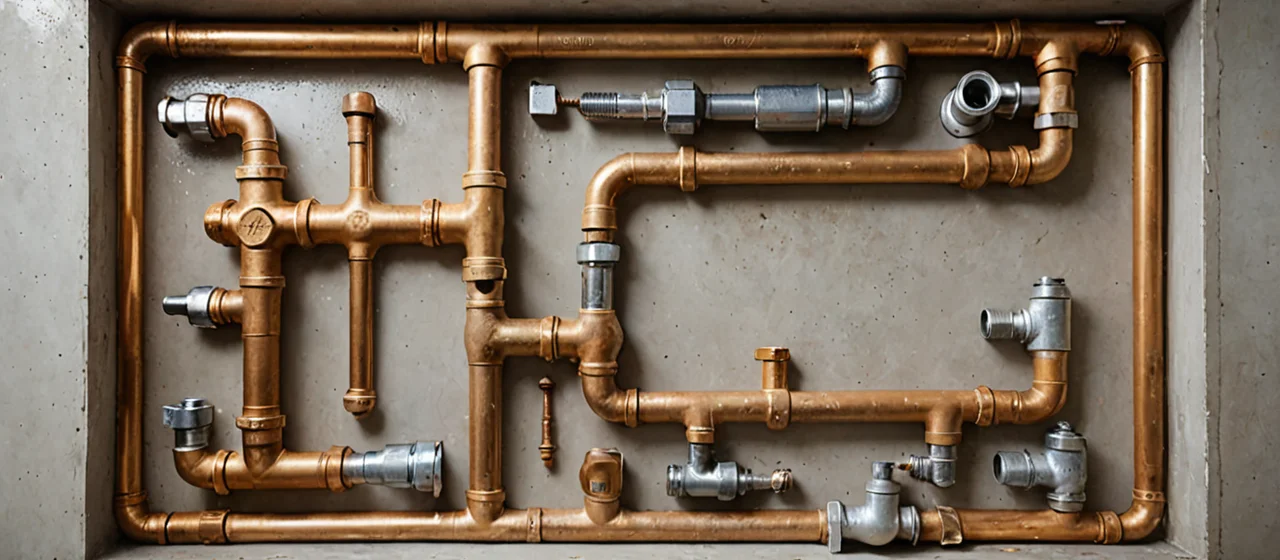


Plumbing is the system of pipes, fixtures, and fittings that brings potable water into a house under pressure and carries waste out of it by gravity, and almost every problem you will face comes down to one of those two forces failing: pressure that isn't there, or a drain that won't fall. Water arrives at roughly 40 to 80 psi in most U.S. homes and leaves through pipes pitched about a quarter inch per foot of run toward the sewer. If you understand those two facts, you can diagnose most of what goes wrong before you touch a wrench.
How a house actually moves water, and why the failure usually tells you where to look
Every supply problem is a pressure problem, and every drain problem is a slope or vent problem. Those are different systems with different failure modes, and the first diagnostic step is deciding which one you're in. A faucet that trickles everywhere in the house points to the pressure regulator or the main shutoff; a single fixture that trickles points to its own supply stop or aerator. A sink that drains slowly but never backs up is a partial clog in the trap arm or branch; a sink that gurgles while draining is a venting problem, because the drain is pulling air through the trap instead of through the roof stack.
Supply lines run at pressure, which is why a pinhole leak in copper or a failed crimp on PEX sprays rather than seeps. That pressure is also why you can shut off a single fixture and keep working: every fixture has a stop valve underneath or behind it, and every house has a main valve near the meter or where the service line enters. Find that main valve before you need it. Know which way it closes, and test it once a year, because gate valves that never move seize open, and the moment you discover that is usually the moment water is running down a wall.
Drains work by gravity and by air. Waste flows downhill at a quarter inch per foot, and behind every slug of water a vent pipe lets air in so the flow doesn't siphon the trap dry. That's why a remodel that moves a fixture without rethinking the vent produces a sink that smells like sewer a week later. The trap holds a water seal; the vent protects that seal. Remove either and the system fails quietly and then unpleasantly.
The limit of this mental model is the older house. Galvanized steel supply pipe rusts from the inside, so pressure drops gradually over years and the water runs brown after a shutoff. That's not a fixture problem and no aerator cleaning will fix it. Repiping a whole house is a real project with real cost, and the honest answer is that once galvanized lines are closing up, patching them one at a time just spreads the work out.
What the code actually requires, and where it stops mattering
The code sets minimums for pipe sizing, materials, and venting, but it does not tell you what a good plumbing job looks like, and passing inspection is a floor, not a ceiling. The Uniform Plumbing Code and the International Plumbing Code are the two model codes most U.S. jurisdictions adopt in some form, and local amendments override both. That means the only sizing table that matters for your house is the one your building department enforces. A permit is not paperwork for its own sake: the inspection is the one moment a third party looks at the rough-in before it's buried in drywall.
Where code genuinely matters most is in the invisible work, and the same logic applies to the energy code that governs the walls you open when you move a drain. Under the 2015 International Energy Conservation Code, the prescriptive minimum for wood-frame wall insulation is R-13 in all climate zones. Later editions layered on continuous insulation: a Climate Zone 4 wood-frame wall under the 2018/2021 IECC can comply with R-20 cavity plus R-5 continuous insulation, or R-13 cavity plus R-10 continuous insulation, or R-0 cavity plus R-20 continuous insulation. Common compliance documentation also lists R-30 cavity, or R-20 cavity plus R-5 ci, or R-13 cavity plus R-10 ci, or R-0 cavity plus R-20 ci. If you're opening an exterior wall to reroute a drain, you'll be putting insulation back, and the assembly you rebuild has to meet the edition your jurisdiction has adopted, not the one from when the house was built.
Basements are the place this bites hardest, because that's where a lot of plumbing renovation happens. In Climate Zone 4, basement walls require R-10 continuous insulation or R-13 cavity insulation from the top of the wall to 10 feet below grade under the 2021 IECC. If you're finishing a basement bathroom and furring out the concrete, that insulation has to go back in the new assembly. Skipping it is cheaper today and shows up as a cold, damp wall behind the tile later.
The trade-off is straightforward: continuous insulation on the exterior of a wood-frame wall costs more up front in materials and detailing, and it moves the dew point, which means your vapor control strategy has to match the assembly you build. Cavity-only insulation is simpler and cheaper, but it leaves the studs as thermal bridges and gives you less total R for the wall thickness. Neither is wrong; they're different answers to the same requirement, and the right one depends on how much wall depth you can afford to lose.
The materials decision, in the order you'll actually face it
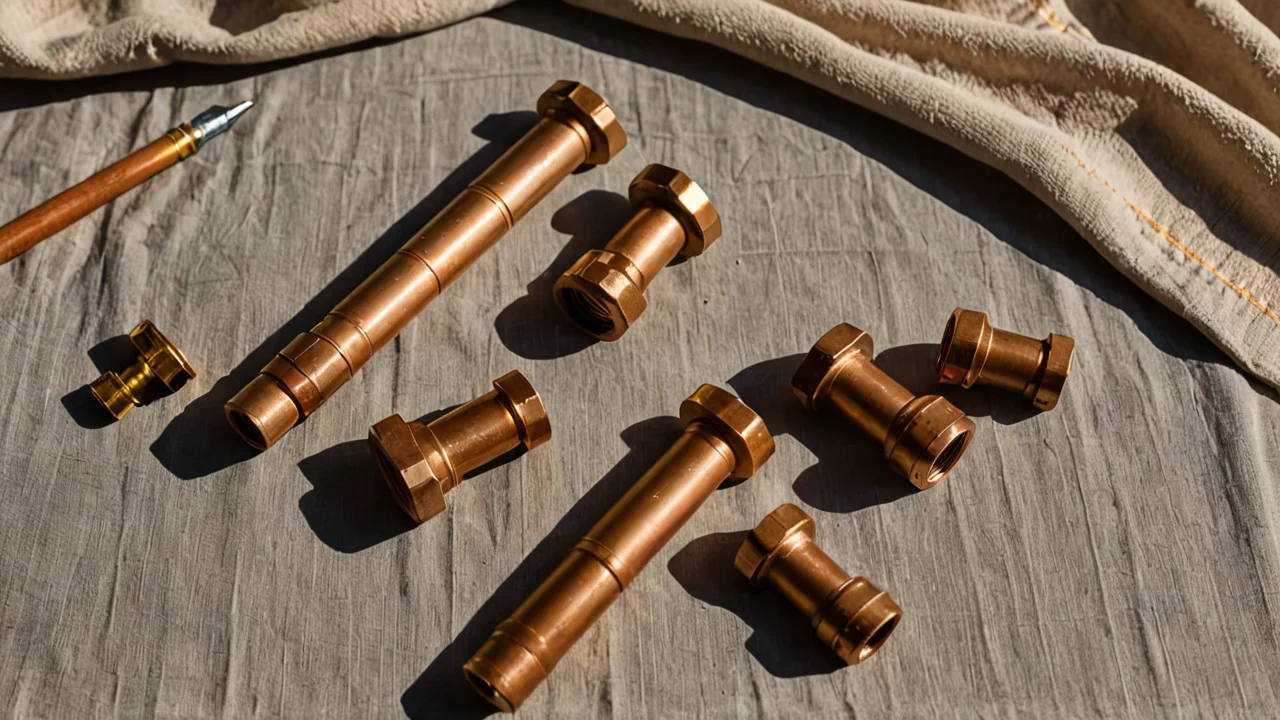
For supply lines, PEX has largely won new construction and most repipes because it's cheap, flexible, and needs fewer joints, and fewer joints means fewer places to leak. Copper is still the right call in some situations: it handles higher temperatures, it's rigid and neat where exposed, and some jurisdictions and insurers prefer it. CPVC is the budget option and it gets brittle with age and heat, so it's a poor choice for a long-term repair in a hot mechanical space.
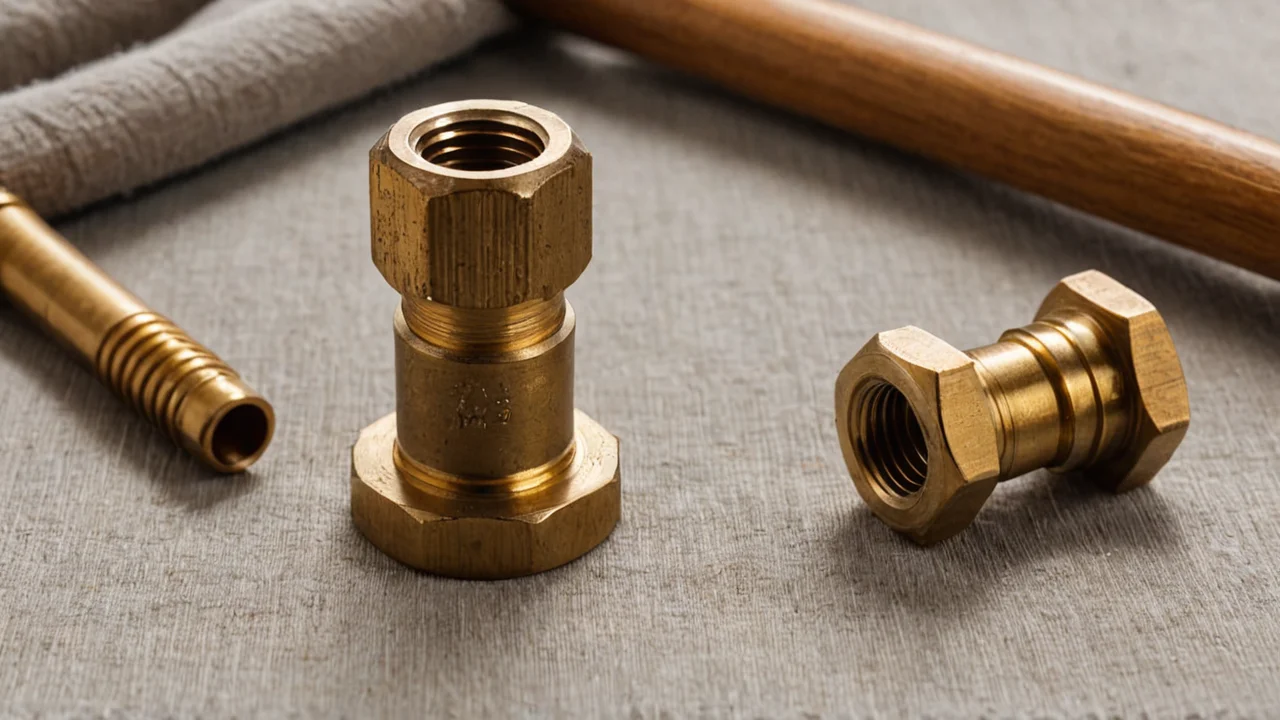
For drains, ABS and PVC are the two plastics you'll see, and which one you can buy depends on region as much as anything. Cast iron is quiet and heavy and lasts, and it's what you'll find in older houses; cutting into it means supporting it properly, because a section of cast iron is not light. Transitioning between materials needs the right banded coupling, and getting that wrong is a common source of slow leaks behind a wall.
Fixtures are where the money and the regret both live. A cheap fill valve or a builder-grade cartridge is the part that fails first, and the fix is usually a few dollars of parts rather than a new fixture. When you're choosing, look at whether the cartridge is a standard replaceable part and whether the manufacturer still sells it. A beautiful faucet with a proprietary cartridge that's discontinued in five years is a future problem.
What this approach costs you is time. Matching materials to what's already in the wall, sourcing the right coupling, and waiting for a permit inspection all stretch a job that a handyman would have "finished" in an afternoon. The return is that the work holds, and the next person to open that wall can tell what they're looking at.
Diagnosing before you cut: the sequence that saves the most money
Shut off the water, confirm it's off at the lowest fixture, and only then open anything. That order sounds obvious and gets skipped constantly, usually because someone closed a stop valve that was already stuck half-open. Test by opening a fixture downstream of where you're working, not the one next to it.
For a leak, the first question is whether it's on the pressurized side or the drain side. Supply leaks run continuously and are usually visible at a fitting or along a run; drain leaks only appear when water flows and often leave a stain below the fixture. For a slow drain, try the cheapest fix first: a plunger, then a hand snake through the trap arm, then a closet auger if it's a toilet. Chemical drain cleaners are the option to skip, especially in older pipes, because they sit in a low spot and attack the pipe as readily as the clog.
For a water heater, the diagnosis is usually in the age and the anode. A tank that's leaking from the shell is done; a tank leaking from a fitting may just need re-taping. Flushing sediment annually extends the life of a tank, and replacing the anode rod is the maintenance step almost nobody does and almost everybody could.
For a home inspection, understand what you're buying. A home inspection is a non-invasive, visual examination of a residential property's readily accessible systems and components, performed for a fee by a certified home inspector and documented in a written report describing observed defects. It's governed by a standard of practice, a formal published set of minimum requirements covering which systems are inspected, what limitations apply, and how findings are documented, used by organizations such as the American Society of Home Inspectors. That scope matters: an inspector reports what's visible and accessible, which means a slow leak inside a wall is outside the inspection, and a plumbing system that passes inspection can still have a problem you'll find in month three. Use the report as a map of what to watch, not a warranty.
Doing it yourself versus calling someone, and how to tell the difference
Replacing a faucet cartridge, a fill valve, a flapper, a supply stop, or a showerhead is squarely DIY territory. So is snaking a single slow drain and swapping a toilet. These are jobs where the parts are cheap, the failure is contained, and a mistake costs you an afternoon rather than a ceiling.
Call a plumber for anything behind a wall or under a slab, anything that requires a permit and inspection to be legal, gas line work, sewer line replacement, and any job where you can't find or operate the shutoff. Water heater replacement is on the line: it's not technically hard, but it involves draining, lifting, venting, and often a permit, and a mistake with the flue or the pressure relief valve is a safety problem, not a convenience problem.
The honest trade-off is that DIY plumbing has a hidden cost: the tools. A press tool for copper, a good drain snake, a torch setup, and the right size cutters for PEX add up fast, and if you're doing one job, renting or hiring is often cheaper than buying. The other hidden cost is time under pressure. A supply stop that snaps off at the wall on a Sunday afternoon turns a small repair into an emergency call, and that's the scenario to picture before you decide.
There's also a liability dimension if you ever sell. Unpermitted work discovered later can complicate a sale, and the buyer's inspector is specifically looking at readily accessible systems. Doing it right, with a permit where one is required, is cheaper than the negotiation it saves.
Maintenance that actually prevents the expensive failures
Know where your main shutoff is and exercise it once a year. That single habit prevents more water damage than any other. Alongside it, know where the fixture stops are and whether they actually close, because a stop that won't shut is the reason a small leak becomes a flooded floor.
Flush the water heater annually to clear sediment, and check the pressure relief valve by lifting it briefly to confirm it discharges and reseats. Test the toilet fill and flapper by putting a drop of food coloring in the tank and checking the bowl after a while without flushing; color in the bowl means the flapper is leaking and you're paying for it on every bill. Check under every sink once a season for dampness at the supply connections and the trap, and look at the base of the water heater for rust.
In cold climates, the freeze risk is in the pipes on exterior walls and in unheated spaces, and the fix is insulation and, where it's practical, a trickle of water during a hard freeze. A burst pipe usually happens after the thaw, not during the freeze, which is why the damage surprises people.
What maintenance costs is a little time and a few dollars of parts each year. What it buys is avoiding the category of repair that involves cutting open a ceiling. The limit is that maintenance can't fix a system that was installed wrong, and in an older house, some of what you're maintaining is already at the end of its design life. When that's the case, planning a replacement on your schedule beats reacting to one on the pipe's.